Um postal imprescindível, pelo José da GL.
«Há três espécies de mentiras: as mentiras, as mentiras sagradas e as estatísticas.»
 Razão tinha o Mark Twain, que isto das estatísticas fora da História, ainda é capaz de fazer com que o abrasado desenvolvimento económico dos canibais
passe a perna (e não só...) ao capialismo-de-papo-cheio em que acabaram os suíços.
 Razão tinha o Mark Twain, que isto das estatísticas fora da História, ainda é capaz de fazer com que o abrasado desenvolvimento económico dos canibais
passe a perna (e não só...) ao capialismo-de-papo-cheio em que acabaram os suíços.
(ora consultem as estatísticas e digam lá se é mentira)


Aqui fica um pertinente artigo, deixado pelo caríssimo anti-comuna, numa caixinha de comentários:
fonte:londonbanker.blogspot.com
Fisher’s Debt-Deflation Theory of Great Depressions and a possible revision “Panics do not destroy capital; they merely reveal the extent to which it has been destroyed by its betrayal into hopelessly unproductive works.”
- Mr John Mills, Article read before the Manchester Statistical Society, December 11, 1867, on Credit Cycles and the Origin of Commercial Panics as quoted in Financial crises and periods of industrial and commercial depression, Burton, T. E. (1931, first published 1902). New York and London: D. Appleton & Co
I have been both a central banker and a market regulator. I now find myself questioning whether my early career, largely devoted to liberalising and deregulating banking and financial markets, was misguided. In short, I wonder whether I contributed - along with a countless others in regulation, banking, academia and politics - to a great misallocation of capital, distortion of markets and the impairment of the real economy. We permitted the banks to betray capital into “hopelessly unproductive works”, promoting their efforts with monetary laxity, regulatory forbearance and government tax incentives that marginalised investment in “productive works”. We permitted markets to become so fragmented by off-exchange trading and derivatives that they no longer perform the economically critical functions of capital/resource allocation and price discovery efficiently or transparently. The results have been serial bubbles - debt-financed speculative frenzy in real estate, investments and commodities.
Since August of 2007 we have been seeing a steady constriction of credit markets, starting with subprime mortgage back securities, spreading to commercial paper and then to interbank credit and then to bond markets and then to securities generally. While the problem is usually expressed as one of confidence, a more honest conclusion is that credit extended in the past has been employed unproductively and so will not be repaid according to the original terms. In other words, capital has been betrayed into unproductive works.
The credit crunch today is not destroying capital but recognising that capital was destroyed by misallocation in the years of irrational exuberance. If that is so, then we are entering a spiral of debt deflation that will play out slowly for years to come. To understand how that works, we turn to Professor Irving Fisher of Yale.
Like me, Professor Fisher lived to question his earlier convictions and pursuits, learning by dear experience the lessons of financial instability.
Professor Fisher was an early mathematical economist, specialising in monetary and financial economics. Fisher’s contributions to the field of economics included the equation of exchange, the distinction between real and nominal interest rates, and an early analysis of intertemporal allocation. As his status grew, he became an icon for popularising 1920s fads for investment, healthy living and social engineering, including Prohibition and eugenics.
He is less famous for all of this today than for his one statement in September 1929 that “stock prices had reached a permanently high plateau”. He subsequently lost a personal fortune of between $6 and $10 million in the crash.
As J.K. Galbraith remarked, “This was a sizable sum, even for an economics professor.” Fisher’s investment bank failed in the bear market, losing the fortunes of investors and his public reputation.
Professor Fisher made his “permanently high plateau” remark in an environment very similar to that prevailing in the summer of 2007. Currencies had been competitively devalued in all the major nations as each sought to gain or defend export market share. The devaluation stoked asset bubbles as easy credit led to more and more speculative investments, including a boom in globalisation as investors bought bonds from abroad to gain higher yields. Then, as now, many speculators on Wall Street had unshakeable faith in the Federal Reserve’s ability to keep the party going.
After the crash and financial ruin, Professor Fisher turned his considerable talents to determining the underlying mechanisms of the crash. His Debt-Deflation Theory of Great Depressions (1933) was powerful and resonant, although largely neglected by officialdom, Wall Street and academia alike.
Fisher’s theory raised too many uncomfortable questions about the roles played by the Federal Reserve, Wall Street and Washington in propagating the conditions for credit excess and the debt deflation that followed.
The whole paper is worth reading carefully, but I’ll extract here some choice quotes which give a flavour of the whole. Prefacing his theory, Fisher first discusses instability around equilibrium and the influence of ‘forced’ cycles (like seasons) and ‘free’ cycles (self-generating like waves). Unlike the Chicago School, Fisher
says bluntly that “exact equilibrium thus sought is seldom reached and never long maintained. New disturbances are, humanly speaking, sure to occur, so that, in actual fact, any variable is almost always above or below ideal equilibrium.”
He bluntly asserts:
“Theoretically there may be — in fact, at most times there must be — over- or under-production, over- or under-consumption, over- or under-spending, over- or under-saving, over- or under-investment, and over or under everything else. It is as absurd to assume that, for any long period of time, the variables in the economic organization, or any part of them, will “stay put,” in perfect equilibrium, as to assume that the Atlantic Ocean can ever be without a wave.”
While disturbances will cause oscillations which lead to recessions, he suggests:
“[I]n the great booms and depressions, each of the above-named factors has played a subordinate role as compared with two dominant factors, namely over-indebtedness to start with and deflation following soon after; also that where any of the other factors do become conspicuous, they are often merely effects or symptions of these two.”
This is the critical argument of the paper. Viewed from this perspective we may see USA and UK decades of under-production, over-consumption, over-spending and under-investment as all tending to a greater imbalance in debt which may, if combined with oscillations induced by disturbances, take the US and UK economies beyond the point where they could right themselves into a deflationary spiral.
Fisher outlines how just 9 factors interacting with one another under conditions of debt and deflation create the mechanics of boom to bust for a Great Depression:
Assuming, accordingly, that, at some point of time, a state of over-indebtedness exists, this will tend to lead to liquidation, through the alarm either of debtors or creditors or both. Then we may deduce the following chain of consequences in nine links:
(1) Debt liquidation leads to distress selling and to
(2) Contraction of deposit currency, as bank loans are paid off, and to a slowing down of velocity of circulation. This contraction of deposits and of their velocity, precipitated by distress selling, causes
(3) A fall in the level of prices, in other words, a swelling of the dollar. Assuming, as above stated, that this fall of prices is not interfered with by reflation or otherwise, there must be
(4) A still greater fall in the net worths of business, precipitating bankruptcies and
(5) A like fall in profits, which in a “capitalistic,” that is, a private-profit society, leads the concerns which are running at a loss to make
(6) A reduction in output, in trade and in employment of labor. These losses, bankruptcies and unemployment, lead to
(7) Hoarding and slowing down still more the velocity of circulation.
The above eight changes cause
(9) Complicated disturbances in the rates of interest, in particular, a fall in the nominal, or money, rates and a rise in the real, or commodity, rates of interest.
Evidently debt and deflation go far toward explaining a great mass of phenomena in a very simple logical way.
Hyman Minsky and James Tobin credited Fisher’s Debt-Deflation Theory as a crucial precursor of their theories of macroeconomic financial instability.
Fisher explicitly ties loose money to over-indebtedness, fuelling speculation and asset bubbles:
Easy money is the great cause of over-borrowing. When an investor thinks he can make over 100 per cent per annum by borrowing at 6 per cent, he will be tempted to borrow, and to invest or speculate with the borrowed money. This was a prime cause leading to the over-indebtedness of 1929. Inventions and technological improvements
created wonderful investment opportunities, and so caused big debts.
* * *
The public psychology of going into debt for gain passes through several more or less distinct phases:
(a) the lure of big prospective dividends or gains in income in the remote future; (b) the hope of selling at a profit, and realising a capital gain in the immediate future;
(c) the vogue of reckless promotions, taking advantage of the habituation of the public to great expectations;
(d) the development of downright fraud, imposing on a public which had grown credulous and gullible.
Fisher then sums up his theory of debt, deflation and instability in one paragraph:
In summary, we find that:
(1) economic changes include steady trends and unsteady occasional disturbances which act as starters for cyclical oscillations of innumerable kinds;
(2) among the many occasional disturbances, are new opportunities to invest, especially because of new inventions;
(3) these, with other causes, sometimes conspire to lead to a great volume of over-indebtedness;
(4) this in turn, leads to attempts to liquidate;
(5) these, in turn, lead (unless counteracted by reflation) to falling prices or a swelling dollar;
(6) the dollar may swell faster than the number of dollars owed shrinks;
(7) in that case, liquidation does not really liquidate but actually aggravates the debts, and the depression grows worse instead of better, as indicated by all nine factors;
(8) the ways out are either laissez faire (bankruptcy) or scientific medication (reflation), and reflation might just as well have been applied in the first place.
The lender of last resort function of central banks and government support of the financial system through GSEs and fiscal measures are the modern mechanisms of reflation. Like Keynes, I suspect that Fisher saw reflation as a limited and temporary intervention rather than a long term sustained policy of credit expansion a la Greenspan/Bernanke.
I’m seriously worried that reflationary practice by Washington and the Fed in response to every market hiccup in recent decades was storing up a bigger debt deflation problem for the future. This very scary chart (click through to view) gives a measure of the threat in comparing Depression era total debt to GDP to today’s much higher debt to GDP.
Certainly Washington and the Fed have been very enthusiastic and innovative in “reflating” the debt-sensitive financial, real estate, automotive and consumer sectors for the past many years. I’m tempted to coin a new noun for reflation enthusiasm: refllatio?
Had Fisher observed the Greenspan/Bernanke Fed in action, he might have updated his theory with a revision. At some point, capital betrayed into unproductive works has to either be repaid or written off. If either is inhibited by reflation or regulatory forbearance, then a cost is imposed on productive works, whether through inflation, higher interest, diversion of consumption, or taxation to socialise losses. Over time that cost ultimately hollows out the real productive economy leaving only bubble assets standing.
Without a productive foundation, as reflation and forbearance reach their limits, those bubble assets must deflate.
Fisher’s debt deflation theory was little recognised in his lifetime, probably because he was right in drawing attention to the systemic failures that precipitated the crash. Speaking truth to power isn’t a ticket to popularity today either.
Acrescento: ver também debate aqui
Actualização (20-9): Ver também Close to the edge publicado pelo Dragão

Depois de uma manha em busca de veados, quando foram mais as vacas que avistei que as gazelas, passei a tarde na observação de passarada, dos besouros, dos ingleses e inspecção ‘as tocas dos texugos ao por-do-sol, por esta ordem respectiva.
 No que diz respeito ao comportamento dos bretoes nestes habitats naturais, nota-se uma tendência bipolar, com momentos de desvario em grupo.
 Tanto podem passar longas horas sentados ao sol, sem pestanejarem, como dar-lhes para as correrias disparatas em tudo quanto ‘e carreiro.
 Como tive a triste ideia de fazer a pé o percurso entre o velho parque dos veados de Richmond e Kew Gardens, inventei um truque para não me passarem a perna ao longo do Tamisa-
 sempre que avistava um destes maratonistas florestal, fingia que também vinha a correr e lá dava uns pulinhos a olhar par o infinito, enquanto eles estavam a ver.

A coisa foi funcionando tão bem, que a dada altura já alternava a marcha pachorrenta com estes ataques de sprint instantâneo, chegando mesmo a ultrapassar, por segundos, uns espanhóis que também se arrastavam no alucinado trajecto.
Mas o melhor estava para acontecer ao chegar a casa e ligar o noticiário.
Então não ‘e que enquanto andei nestas andanças tão bucólicas, a Scotland Yard e os guionistas da BBC conseguiram desactivar um ataque terrorista aéreo?
 ‘E verdade, não se imagina como, mas foi mesmo assim. Ainda caçaram três mecos, um deles com perfeito ar de mongo, que explicaram que não era propriamente um atentado a serio, mas mais uma espécie de animação terrorista, a condizer com a quadra. Eles chamaram-lhe mesmo a Political spectacle e garantiram que não tencionavam matar ninguem, com as tais bombas dentro de garrafas de refrigerante.
 Seja como for, o trabalho que faltou aos terroristas amadores foi rapidamente suplantado pelo profissional show televisivo, onde ainda se consegui ver uma avião a explodir, na sequência desta fantástica ameaça
No final lá se aproveitou o “caso” para lembrar a necessidade de controle de imigração.
‘E assim, enquanto que por ai os importam; por ca andam na fase do despejo e qualquer pretexto serve.
Esperemos que o sadismo também se fique pela agit prop governamental, que para show AlQaedista ‘e quanto basta.
.......... No que diz respeito ao comportamento dos bretoes nestes habitats naturais, nota-se uma tendência bipolar, com momentos de desvario em grupo.
 Tanto podem passar longas horas sentados ao sol, sem pestanejarem, como dar-lhes para as correrias disparatas em tudo quanto ‘e carreiro.
 Como tive a triste ideia de fazer a pé o percurso entre o velho parque dos veados de Richmond e Kew Gardens, inventei um truque para não me passarem a perna ao longo do Tamisa-
 sempre que avistava um destes maratonistas florestal, fingia que também vinha a correr e lá dava uns pulinhos a olhar par o infinito, enquanto eles estavam a ver.
A coisa foi funcionando tão bem, que a dada altura já alternava a marcha pachorrenta com estes ataques de sprint instantâneo, chegando mesmo a ultrapassar, por segundos, uns espanhóis que também se arrastavam no alucinado trajecto.
Mas o melhor estava para acontecer ao chegar a casa e ligar o noticiário.
Então não ‘e que enquanto andei nestas andanças tão bucólicas, a Scotland Yard e os guionistas da BBC conseguiram desactivar um ataque terrorista aéreo?
 ‘E verdade, não se imagina como, mas foi mesmo assim. Ainda caçaram três mecos, um deles com perfeito ar de mongo, que explicaram que não era propriamente um atentado a serio, mas mais uma espécie de animação terrorista, a condizer com a quadra. Eles chamaram-lhe mesmo a Political spectacle e garantiram que não tencionavam matar ninguem, com as tais bombas dentro de garrafas de refrigerante.
 Seja como for, o trabalho que faltou aos terroristas amadores foi rapidamente suplantado pelo profissional show televisivo, onde ainda se consegui ver uma avião a explodir, na sequência desta fantástica ameaça
No final lá se aproveitou o “caso” para lembrar a necessidade de controle de imigração.
‘E assim, enquanto que por ai os importam; por ca andam na fase do despejo e qualquer pretexto serve.
Esperemos que o sadismo também se fique pela agit prop governamental, que para show AlQaedista ‘e quanto basta.
Nota: o post est'a com a data certa, eu 'e que s'o o escrevi hoje (9/9).
...........
Acrescento:
Como se nao bastasse, os anormais ate ja tem programas de reconstituicao, onde ensinam a fazer a bomba...
":O+

Há de ser retribuição tardia mas bem saborosa, esta vitoria do mercado latino de Portobello contra a velha gloria marítima inglesa no Panamá.
 Já o Hogarth havia representado o local na satírica serie das Eleições em Oxfordshire,com umas pertinentes alusões ‘a corrupção dos Wighs que haviam usados os impostos para financiar a campanha e outras discussões acerca do declínio naval britânico.

Aos fins-de-semana, Portobello, cada vez mais sob efeito da invasão das tríadas, lá vai enganando os custos do crash e não há ASAE que se atreva a estragar uma boa paella, cozinhada no meio da rua.
 Já o Hogarth havia representado o local na satírica serie das Eleições em Oxfordshire,com umas pertinentes alusões ‘a corrupção dos Wighs que haviam usados os impostos para financiar a campanha e outras discussões acerca do declínio naval britânico.
Aos fins-de-semana, Portobello, cada vez mais sob efeito da invasão das tríadas, lá vai enganando os custos do crash e não há ASAE que se atreva a estragar uma boa paella, cozinhada no meio da rua.
Ele h’a coisas que contadas nem se acredita...

Como as gárgulas se recolheram por falta de Sol, decidimos embrenharmo-nos pelo bosque, tentando outras caçadas.
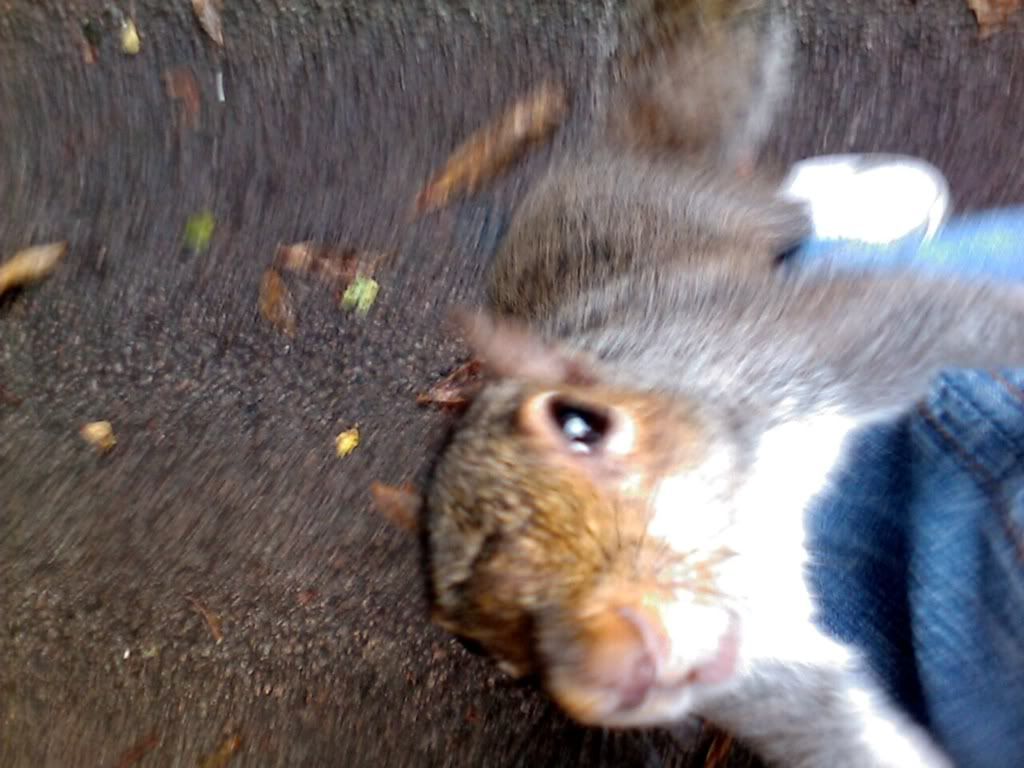
Sem nada que fizesse prever, rebenta tamanha trovoada que um esquilo maluco at’e trepou por mim acima com o susto
A partir dai faltam as imagens, dado que fomos todos na enxurrada.
Uma hora depois, quais Mad Max em triplicado, l'a conseguimos sair de dentro da lama e arrastarmo-nos at'e 'a estrada
E palavrinha que a ideia era apenas tirar umas fotos bucólicas ‘a p*** da pérgola do rei do sabão .
Como as gárgulas se recolheram por falta de Sol, decidimos embrenharmo-nos pelo bosque, tentando outras caçadas.
Sem nada que fizesse prever, rebenta tamanha trovoada que um esquilo maluco at’e trepou por mim acima com o susto
A partir dai faltam as imagens, dado que fomos todos na enxurrada.
Uma hora depois, quais Mad Max em triplicado, l'a conseguimos sair de dentro da lama e arrastarmo-nos at'e 'a estrada
E palavrinha que a ideia era apenas tirar umas fotos bucólicas ‘a p*** da pérgola do rei do sabão .
O Pedro Arroja, de tanto falar em estrangeiro, mesmo sem ter dado nome a aeroporto, já conseguiu internacionalizar-se no espaço etéreo.
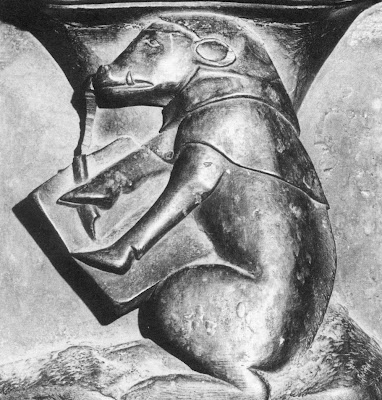 Atenção, que a descoberta desta nossa mascote anti-semita, que ofusca o Galo de Barcelos, não foi obra de algum dos 500 judeus ou marranos autóctones.
Deve-se a uma intelectual pró-sionista franciú, que também sabe ler estrangeiro.
E muito cuidadinho a quem mantiver a ligação ao Portugal Contemporâneo; a moça e, quiçá, a Mossad, estão atentas:
«What is amazing is not so much that such blatantly anti-Semitic ravings are still being published, but that well respected Portuguese fellow bloggers have added Portugal Contemporâneo to their blog-rolls.»
 Atenção, que a descoberta desta nossa mascote anti-semita, que ofusca o Galo de Barcelos, não foi obra de algum dos 500 judeus ou marranos autóctones.
Deve-se a uma intelectual pró-sionista franciú, que também sabe ler estrangeiro.
E muito cuidadinho a quem mantiver a ligação ao Portugal Contemporâneo; a moça e, quiçá, a Mossad, estão atentas:
«What is amazing is not so much that such blatantly anti-Semitic ravings are still being published, but that well respected Portuguese fellow bloggers have added Portugal Contemporâneo to their blog-rolls.»
«Nela [região de Cabo de Monte] há uma casta de monos que não há em outra Guiné, chamados “Daris”, sem rabos, e se não tivessem cabelos podia-se dizer que eram humanos, como nós; porque nas feições há pouca diferença. 
Andam em pé e alguns que se tomam depois de se fazerem à casa vão catar água ao rio em uma vasilha, e a trazem à cabeça; mas têm tal qualidade que em chegando à porta da pousada lhe dão de acudir depressa e tomar-lhe a vasilha da cabeça; e não fazendo isto eles mesmos as deixam cair no chão, e se põe a chorar com grandes gritos. Malham nos pilões dos negros os mantimentos como uma pessoa. São baixos de corpo, grossos, de boas pernas e braços. São amigos da conversação das moças, e se acham algumas desencaminhadas e sós, as apanham, e levam consigo, e lhes fazem muito mimo a seu modo».

Andam em pé e alguns que se tomam depois de se fazerem à casa vão catar água ao rio em uma vasilha, e a trazem à cabeça; mas têm tal qualidade que em chegando à porta da pousada lhe dão de acudir depressa e tomar-lhe a vasilha da cabeça; e não fazendo isto eles mesmos as deixam cair no chão, e se põe a chorar com grandes gritos. Malham nos pilões dos negros os mantimentos como uma pessoa. São baixos de corpo, grossos, de boas pernas e braços. São amigos da conversação das moças, e se acham algumas desencaminhadas e sós, as apanham, e levam consigo, e lhes fazem muito mimo a seu modo».
André Alvares Almada, Tratado Breve dos Rios da Guiné, Lisboa (c. 1494), ed. L. Silveira, Lisboa,1946, p. 49
Ver: António Luís Ferronha,Mariana Bettencourt, Rui Loureiro, A fauna Exótica dos Descobrimentos, Lisboa, Edições Elo, 1993
O efeito dissuasor da mega-operação de resgate de reféns tem vindo a mostrar os seus frutos.

Os ladrões voltaram aos bons hábitos e têm apenas feito assaltos quotidianos a bancos.

Os ladrões voltaram aos bons hábitos e têm apenas feito assaltos quotidianos a bancos.
(...)
Este mesmo Rui Pereira que agora aplaude pressurosamente e com amplo aplauso geral, esta operação executiva de morte de sequestradores, à ordem de um comando policial, avalizada por ele próprio, é o mesmo ministro que liderou a reforma dos códigos penais e a Unidade de Missão que disso se encarregou.
Nesta altura, o balanço efectuado por várias entidades oficiais,( vários responsáveis do MP e a PGR, por exemplo), é denunciador de um estado de Direito, em Portugal, onde os criminosos de alta e baixa densidade (como é o caso destes dois punks da banditagem amadora), têm ampla liberdade de movimentos, porque os requisitos para a prisão preventiva estão tão restringidos que nem se percebe que este assaltante sequestrador que sobreviveu, possa de alguma forma ficar em prisão preventiva. As penas e as exigências quanto aos requisitos de prova, foram tão aprimorados que qualquer advogado de meia tijela, anula um julgamento ou uma prova recolhida em Inquérito, se nisso se empenhar.
Neste aspecto, gravíssimo para um Estado de Direito que se preze e ao contrário do que afirmam, sempre para o garantir, pode Rui Pereira limpar as mãos à parede, como aliás, já foi aconselhado, na prática dos argumentos que lhe apresentou pessoalmente, por um dos autores de comentários às leis penais- Costa Andrade.
O sentimento de impunidade da banditagem de pequena e média dimensão é tal que os pequenos punks do assalto a carros e da prática reiterada de car-jacking, home-jacking e outros exercícios , já nem se dão ao cuidado de ter cuidado com a polícia. Já-que- isto- está – assim- vamos- lá- experimentar-um- pequeno- assalto- que-no fim de contas-pouco ou nada- nos acontece. É este o sentimento geral e evidente e que só não nota quem não quer notar.
As notícias diárias, no Correio da Manhã e no 24 Horas, já nem espantam o transeunte que toma conhecimento, na rua, de mais assaltos violentos, de mais assaltos a bancos, de mais assaltos com gangs e outras malfeitorias que não preocupam muito os Ruis Pereiras, enquanto as estatísticas oficiais, contradisserem numericamente a realidade por todos vivida.
Este pathos e este ambiente deletério na sociedade, foi criado objectiva e reiteradamente pelos Ruis Pereiras que assentam lições nas faculdades de Direito e depois as vertem em letra de lei, nos códigos penais e de processo, com ideias peregrinas que só podem resultar em laxismo de comportamentos sociais. Os acontecimentos na Quinta da Fonte e noutros lados, fogem ao alcance dos snipers do GOE, mas têm um reflexo social muito mais profundo. Nesses casos, Rui Pereira está no Brasil, ausente da realidade vivida por cá.
Agora, o politicamente correcto,veiculado por um director da PSP que não sabe distinguir o verbo manipular do verbo manietar, é iludir a nacionalidade dos assaltantes. “São pessoas como eu e você”, disse o dito cujo. Pois são. E que foram condenados à morte, por execução do verbo neutralizar. Talvez ainda vão a tempo de conjugar o verbo prevenir. Vão sempre a tempo, aliás. Desde que tenham inteligência suficiente para tal e se eximam ao ridículo de aplaudir operações militares contra dois punks. Falhadas, ainda por cima, nos objectivos de neutralização definitiva. (...)
A ler na íntegra, na GL
(Um texto destes- objectivo, informativo e acutilante é que não se lê em mais lado nenhum; a começar pelos jornais).
a propósito do "caso", mandada pelo José, numa caixinha do Blasfémias, ao som do Zappa:
«Nada disso. Bastava lerem o Correio da Manhã, mais vezes. Ou o 24 Horas. Ficavam a saber que em Portugal, qualquer crime compensa. Menos o de sequestro, com reféns. Esse, dá direito a pena de morte».
«Nada disso. Bastava lerem o Correio da Manhã, mais vezes. Ou o 24 Horas. Ficavam a saber que em Portugal, qualquer crime compensa. Menos o de sequestro, com reféns. Esse, dá direito a pena de morte».
........................
Acrescento (9/8)
A seguir, persistente série de desmontagem feita pelo João Miranda no Blasfémias
Aqui ficam as bananas, roubadas à Cris

Yes, we have no bananas
We have-a no bananas today.
Just try those coconuts
Those all-nuts and doghnuts
There ain't many nuts like they.
We'll sell you two kinds of red herring,
Dark brown, and ball-bearing.
But yes, we have no bananas
We have no bananas today
A acompanhar, de preferência ao fim da tarde, com o resto da receita bem azulinha

Yes, we have no bananas
We have-a no bananas today.
Just try those coconuts
Those all-nuts and doghnuts
There ain't many nuts like they.
We'll sell you two kinds of red herring,
Dark brown, and ball-bearing.
But yes, we have no bananas
We have no bananas today
A acompanhar, de preferência ao fim da tarde, com o resto da receita bem azulinha
Quando um português assaltava um banco, até lhe bastava levar banana a fazer de pistola.

Essa é que é a nossa tradição de assalto bancário- banana embrulhada em jornal, apontada ao caixa e a fazer voz grossa: "olhe que isto não é uma banana!".
Era assim que se assaltava em Portugal, nos bons velhos tempos.
Claro que aí o ladrão não tinha culpa de o caixa lhe oferecer uma porrada de dinheiro, em troca de uma peça de fruta...

Essa é que é a nossa tradição de assalto bancário- banana embrulhada em jornal, apontada ao caixa e a fazer voz grossa: "olhe que isto não é uma banana!".
Era assim que se assaltava em Portugal, nos bons velhos tempos.
Claro que aí o ladrão não tinha culpa de o caixa lhe oferecer uma porrada de dinheiro, em troca de uma peça de fruta...

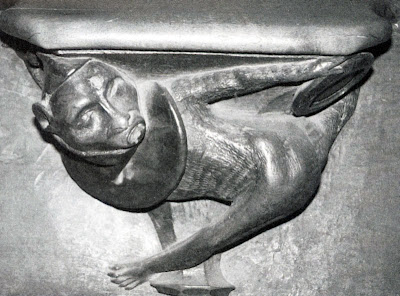
Por falar em minorias e rodas da fortuna, aqui fica um macaquinho marrano, de barrete e escapulário, que já praticava rumpologia apóstata, muito antes do Rambo .
Ai, adonai, ai, ai, que é desta que o Nuno Guerreiro faz queixa a Israel e ainda nos bombardeiam o estamine.

Ai, adonai, ai, ai, que é desta que o Nuno Guerreiro faz queixa a Israel e ainda nos bombardeiam o estamine.
O programa do acampamento para a junventude bloquista não deixa causa sem massagem. De palestras para opção mais alternativa com brinquedos sexuais, passando pelos bio-combustíveis, minorias, racismo, luta anti-autoritarismo ou treino de drogas e pichagens de rua, há workshops para tudo. Mas lindo, lindo, deve ser o momento doTeatro do Oprimido, seguido de comício.

Pela nossa parte, deixamos aqui uma ligeira antecipação deste estrepitoso veraneio fracturante nas berças.
Atente-se à parábola: o labrego é branco,escanrracha-se todo e a cabra que o carregue; já o negro pode ser rico, mas vai a pé; afaga, mas não comprime o animal.

Pela nossa parte, deixamos aqui uma ligeira antecipação deste estrepitoso veraneio fracturante nas berças.
Atente-se à parábola: o labrego é branco,escanrracha-se todo e a cabra que o carregue; já o negro pode ser rico, mas vai a pé; afaga, mas não comprime o animal.
...........
programa via Blasfémias
Acrescento: Reparei agora que o hino é da autoria do Jaquinzinho.
Tem jeitinho, sim senhor...

les beaux esprits toujours se rencontrent

"Qu'est-ce donc que j'ai cru être ci-devant ? Sans difficulté, j'ai pensé que j'étais un homme. Mais qu'est-ce qu'un homme ? Dirai-je que c'est un animal raisonnable ? Non certes : car il faudrait par après rechercher ce que c'est qu'animal, et ce que c'est que raisonnable, et ainsi d'une seule question nous tomberions insensiblement en une infinité d'autres plus difficiles et embarrassées, et je ne voudrais pas abuser du peu de temps et de loisir qui me reste, en l'employant à démêler de semblables subtilités. Mais je m'arrêterai plutôt à considérer ici les pensées qui naissaient ci-devant d'elles-mêmes en mon esprit, et qui ne m'étaient inspirées que de ma seule nature, lorsque je m'appliquais à la considération de mon être. Je me considérais, premièrement, comme ayant un visage, des mains, des bras, et toute cette machine composée d'os et de chair, telle qu'elle paraît en un cadavre, laquelle je désignais par le nom de corps".

"Qu'est-ce donc que j'ai cru être ci-devant ? Sans difficulté, j'ai pensé que j'étais un homme. Mais qu'est-ce qu'un homme ? Dirai-je que c'est un animal raisonnable ? Non certes : car il faudrait par après rechercher ce que c'est qu'animal, et ce que c'est que raisonnable, et ainsi d'une seule question nous tomberions insensiblement en une infinité d'autres plus difficiles et embarrassées, et je ne voudrais pas abuser du peu de temps et de loisir qui me reste, en l'employant à démêler de semblables subtilités. Mais je m'arrêterai plutôt à considérer ici les pensées qui naissaient ci-devant d'elles-mêmes en mon esprit, et qui ne m'étaient inspirées que de ma seule nature, lorsque je m'appliquais à la considération de mon être. Je me considérais, premièrement, comme ayant un visage, des mains, des bras, et toute cette machine composée d'os et de chair, telle qu'elle paraît en un cadavre, laquelle je désignais par le nom de corps".
Subscrever:
Mensagens (Atom)